
Agenda
Saturday, April 18th 2026
Registration & Lunch
11.00 – 13.00
Welcome & Introduction
13.00 – 13.15

Manfred Döpfner
(University of Cologne, Cologne, Germany)
ADHD runs in families: Implications for screening, diagnosis and treatment planning
13.15 – 14.00

Mark Stein
(University of Washington, Seattle, USA)
Pharmacotherapy in children and parents with ADHD
14.00 – 14.45
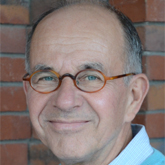
Jan Buitelaar
(Radboud University Nijmegen, The Netherlands)
Break
14.45 – 15.15
Psychological interventions in children and parents with ADHD
15.15 – 16.00

Andrea Chronis-Tuscano
(University of Maryland, College Park, USA)
Do digital psychological interventions in children with ADHD improve family stress and family relationships?
16.00 – 16.45
Manfred Döpfner
(University of Cologne, Cologne, Germany)
End of Day Panel
16.45 – 17.30
Sunday, April 19th 2026
A keynote Session – Stories from the frontline
09.00 – 10.30

Joanne Liu
(McGill University, Montreal)
Closing Panel
10.30 – 11.00
You can download the agenda here.
Jeffrey Newcorn (New York, USA)
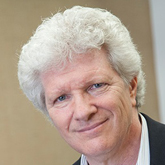
Dr. Newcorn is a professor of psychiatry and pediatrics, director of the Division of ADHD and Learning Disorders at Icahn School of Medicine at Mount Sinai.
His latest research focuses on the clinical and neurobiological basis for differential response to ADHD treatments, using data collected from clinical, pharmacogenetic, and fMRI measures, as well as the neurobiological basis of substance abuse risk in individuals with ADHD.
Carmen Schröder (Strasbourg, France)

Carmen Schröder, MD, PhD, is Professor of Child and Adolescent Psychiatry at Strasbourg University and head of the Department of Child and Adolescent Psychiatry at Strasbourg University Hospitals in France, as well as the coordinator of the Excellence Centre for Autism and Neurodevelopmental disorders STRAS&ND. Prof. Schröder’s career trajectory is international: of German origin, she has studied medicine in Germany and France, before specializing first in General Psychiatry and then in Child and Adolescent Psychiatry in France, Switzerland (Basel) and the United States (post-doctorate and junior faculty, Stanford University). She represents France since 2016 within the European Union of Medical Specialists for CAP (UEMS-CAP) and has been elected as president of the CAP section in 2020; recently, she has also been elected as a board member of the European and of the International Association of CAP (ESCAP, since 2023, and IACAPAP, since 2022).
Beyond her CAP positions, Prof. Schröder is a European Board-Certified Sleep expert, and her main clinical and research interests (within a CNRS group at the Institute for Cellular and Integrative Neurosciences in Strasbourg) are focused on sleep and circadian rhythm disturbances in children and adolescents, in particular in neurodevelopmental disorders such as autism. She has published more than 100 publications, mostly on implications of sleep disorders and/or circadian rhythm disorders on child’s development or child and adolescent psychiatric disorders.
Jan Buitelaar (Nijmegen, Netherlands)
Jan Buitelaar is an emeritus professor of psychiatry and child and adolescent psychiatry at the Radboud University Medical Centre, and at the Donders Institute for Brain, Cognition and Behaviour in Nijmegen, The Netherlands. He has a strong clinical and research interest in neurodevelopmental conditions. His current active research is focused on translational studies aiming to identify new molecular targets for ADHD and autism through matching preclinical models to human imaging genetics studies. His research is supported by numerous grants from the European Union, NIH, and from the Dutch Medical Research Council. He has published more than 1100 peer-reviewed scientific papers with more than 100,000 citations and is among the top 1% of most often cited researchers worldwide.
He has been awarded several honours, such as the research price of the Dutch Society of Psychiatry in 2011, the international travelling speaker fellowship 2011/2012 of the Association for Child and Adolescent Mental Health, the Merz Guest Professorship at Goethe University in Frankfurt in 2014, the Oeuvre Award of European Society for Child and Adolescent Psychiatry ESCAP in 2019, the Lifetime Achievement Award of European Network for Hyperkinetic Disorder Eunethydis in 2022, and the Lifetime Achievement Award of the International Society for Autism Research in 2023. He is an elected member of the Academia Europaea, and vice-president of the ADHD World Federation. He has been knighted in the order of the Dutch Lion.
Thomas Schulz (Munich, Germany)
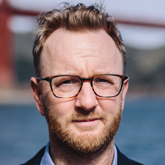
Thomas Schulz is Chief Reporter for «Der Spiegel», Germanys leading news magazine. Previously, he reported for almost a decade as a correspondent for «Der Spiegel» from the USA: initially from New York, before moving to San Francisco in 2012 to set up the editorial office in Silicon Valley.
His international business bestseller “Was Google wirklich will” (“What Google Really Wants”) was published in 2015, followed by “Zukunftsmedizin – Wie das Silicon Valley Krankheiten besiegen und unser Leben verlängern will” (“Future medicine – How Silicon Valley wants to defeat diseases and extend our lives”). His new book „Projekt Lebensverlängerung“ („Project Longevity“) was published in September. Schulz holds an MS in Political Science and an MA in Journalism. He was a Fulbright scholar and researched international economic policy as a visiting scholar at Harvard University.
Schulz has been honoured with several awards for excellence in journalism and as Germany´s Journalist of the Year.
Alexandra Philipsen (Bonn, Germany)

Alexandra Philipsen, MD. Since 2018 Director and W3 Professor of the Department of Psychiatry and Psychotherapy, University of Bonn. Since 2021 Deputy Medical Director of the University Hospital Bonn. 2014-2017 Director and W3 Professor of the Dept. of Psychiatry and Psychotherapy, Karl Jaspers Klinik, European Medical School, Oldenburg-Groningen.
2009-2014 Executive Senior Physician, Department of Psychiatry and Psychotherapy, University of Freiburg. 2009 Habilitation "on the etiology, symptomatology and therapy of attention-deficit/hyperactivity disorder in adults". 1999 Dr. med. "Botulinum toxin A as a new therapy option in neuropaediatrics, University of Freiburg.
Supervisor for cognitive behavior therapy, dialectical behavior therapy. Scientific focus: translational therapy research on attention and emotion regulation, development and evaluation of pharmacological and non-pharmacological treatments for ADHD in adults. Clinical focus: diagnosis and treatment of the entire spectrum of mental disorders, especially affective disorders such as depression, stress-associated disorders, ADHD in adulthood and personality disorders, crisis intervention and suicidality. Scientific advisor of ADHS-Deutschland (https://adhs-deutschland.de/Home.aspx), member of the steering board of the German ADHD Network (www.zentrales-adhs-netz.de).
Anja Görtz-Dorten (Cologne, Germany)

Prof. Dr. rer. medic. Anja Görtz‐Dorten, Dipl.‐Psych., Dipl.‐Heilpäd.
Graduation in special education (Dipl.-Heilpäd.) 1994 (University of Applied Sciences Cologne); license in Child and Adolescent Psychotherapy, 1999; graduation in Psychology (Dipl.-Psych.) 2000 (University Düsseldorf); PhD 2005 (University of Cologne); Habilitation 2014 (University of Cologne); adjunct Professor at the Medical Faculty and the Faculty of Human Sciences of the University of Cologne 2019; Head of the outpatient clinic and the research department at the Center for Child and Adolescent Cognitive Behavior Therapy (CeKiP) and Supervisor in Cognitive Behavior Therapy.
Member of the German Conduct Disorders Guidelines Group.
Research in development and evaluation of assessment instruments of mental disorders and personalized modular cognitive-behavioral treatment programs including digitally supported assessment and intervention for children and adolescents with mental disorders.
Emily Simonoff (London, UK)

Emily Simonoff MD, FRCPsych
Professor of Child and Adolescent Psychiatry & Head of Department Director, King’s Maudsley Partnership for Children and Young People King’s College London, Institute of Psychiatry, Psychology and Neuroscience
Emily Simonoff is Professor of Child and Adolescent Psychiatry at the Institute of Psychiatry, Psychology and Neuroscience, King’s College London, where she is also head of the Department and Director of the King’s Maudsley Partnership for Children and Young People. She is also academic lead for the Child and Adolescent Mental Health Services Clinical Academic Group at the South London and Maudsley Foundation Trust. Emily’s research and clinical focus is on neurodevelopmental disorders in children and young people and their overlap with other mental disorders. She is a UK National Institute of Health Research Senior Investigator. She was the Senior Clinical Advisor to the National Institute of Health and Clinical Excellence (NICE) on the 2018 ADHD guidelines and was a member of the ICHOM Standard Set for Neurodevelopmental Disorders Advisory Group. She chaired the European ADHD Guidelines Group from 2014 to 2022/ Emily’s interests span a range of neurodevelopmental disorders. She has also been a member of the two NICE Guidelines groups for autism and a member of the Strategy Board for the UK National Autism Project. She has been a member of the Westminster Commission for Autism and has given evidence to the All-Party Parliamentary Group on Autism. Emily receives research funding related to autism from the Medical Research Council, Economic and Social Research Council, National Institute of Health and Research EU Innovative Medicines Initiative, amongst other organization. She is a consultant child and adolescent psychiatrist in the Maudsley-based Service for Complex Autism and Associated Neurodevelopmental Disorders, funded by NHS England to see children and young people across the southern region with complex presentations.
Manfred Döpfner (Cologne, Germany)
Professor emeritus of Psychotherapy at the Department of Child and Adolescent Psychiatry, Psychosomatic and Psychotherapy, Medical Faculty
and Faculty of Human Sciences of the University of Cologne, Germany.
Professor Dr. Doepfner began his career with a Psychology degree at the University of Mannheim. Germany. In 1990, he received his doctorship from the University of Heidelberg’s Faculty of Medicine. He is supervisor of behaviour therapy and Head of the School or Child and Adolescent Cognitive Behavior Therapy (AKiP) at the University of Cologne. He received the German Psychology Prize for his scientific work in 2005.
His main research interests are assessment, prevention, and treatment of ADHD, Conduct Disorders, Anxiety Disorders, Obsessive-Compulsive Disorders and Tic Disorders. He is principal investigator of several multicentre trials on pharmacotherapy and psychotherapy of ADHD and conduct disorders, of prevention studies for externalizing problem behaviour in children, and on self-help-interventions for parents of children and adolescents with ADHD/ODD.
Prof. em. Manfred Doepfner, PhD
Department for Child and Adolescent Psychiatry, Psychosomatic and Psychotherapy
School for Child and Adolescent Cognitve Behavior Therapy
University of Cologne
Pohligstr. 9, D-50969 Koeln, Germany
manfred.doepfner@uk-koeln.de
Diane Purper-Ouakil (Montpellier, France)
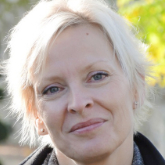
Diane Purper-Ouakil is professor of child and adolescent psychiatry at the university hospital of Montpellier, France. Since 2011, she is head of the child and adolescent unit of the Saint Eloi Hospital. This unit has facilities for both inpatient and outpatient care for young patients and has specialized services for children and adolescents with ADHD and eating disorders.
She is also vice-president of the faculty college of psychiatry involved in the ongoing reform of the training curriculum of medical studies and is member of the professional college of psychiatrists.
Diane Purper-Ouakil aims to develop the evidence-base of psychological, neurophysiological and pharmacological treatments, especially for children and adolescents with challenging and enduring behavioural and emotional symptoms. She is involved in collaborative treatment studies, some assessing parent programs, an important feature of comprehensive treatment plans for young people with complex needs.
Mark Stein (Seattle, USA)
Mark A. Stein Ph.D. is a clinical psychologist and Professor of Psychiatry and Pediatrics at University of Washington. He is past president of the American Professional Society of ADHD and Related Disorders, a member of Eunythydis, and in 2017 achieved CHADD’s Lifetime Achievement Award. As a clinician and researcher, he has authored over 150 articles and is on the editorial board of several journals. Areas of interest include ADHD treatment, sleep, and ADHD in families. He is the founder of multidisciplinary ADHD clinics in Chicago and Washington DC, and in 2013 started the PEARL Clinic (Program to Enhance Attention, Regulation, and Learning) at Seattle Children’s. He also has a private practice focused on adolescent and adult ADHD.
Joanne Liu (McGill University, Montreal)
Dr. Liu is a Canadian practicing paediatric emergency physician and professor at McGill University’s School of Population & Global Health, director of Pandemic & Emergency readiness lab (PERL), where she focuses on polycrisis and health emergencies. Prior to joining McGill, she was the International President of Médecins Sans Frontières for over six years from 2013-2019. Through her leadership, she spearheaded the emergency responses to humanitarian and health emergencies including outbreaks/epidemics in West (Ebola 2014-2016) and denounced the attacks on hospitals at the UNSC on May 2016 which led to the UNSC resolution 2286 on the Protection of the Medical Mission in conflict zones. She practices mediation/negotiation in conflict zones and medical emergency aid delivery in the humanitarian aid sector.
Andrea Chronis-Tuscano (University of Maryland, College Park, USA)
Dr. Chronis-Tuscano is the Joel & Kim Feller Professor of Psychology at the University of Maryland, where she directs the Maryland ADHD Program and SUCCEEDS College ADHD Clinic. Dr. Chronis-Tuscano's research focuses broadly on understanding early predictors of developmental outcomes for children with Attention- Deficit/Hyperactivity Disorder (including depression and alcohol/substance use) and developing novel treatments which target these early risk and protective factors. Much of this research has addressed issues related to parenting and parental psychopathology (namely, maternal depression and ADHD). Most recently, she has utilized hybrid effectiveness-implementation designs to develop treatments that can be implemented in community settings such as pediatrics and schools. Dr. Chronis-Tuscano is the Past-President of the Society for Clinical Child and Adolescent Psychology and the International Society for Research in Child and Adolescent Psychopathology; past Associate Editor of the Journal of Consulting & Clinical Psychology and the Journal of Clinical Child & Adolescent Psychology; Fellow of the Association for Psychological Science, Association for Behavioral & Cognitive Therapies (ABCT), and SCCAP; and former standing member of the NIMH Mental Health Services Research (SERV) review committee. She is the recipient of multiple NIH grants and has served on several NIH review committees relevant to developmental psychopathology and interventions. She is the author of over 160 publications, primarily on the topic of ADHD. In 2025, she was awarded the inaugural Pelham Visionary Award for ADHD Research and Treatment.